The best patio ideas combine attractive materials with a layout that suits everyday life. A well-planned patio can create space for dining, relaxing and entertaining while improving the connection between the house and garden.
Modern patios often use clean lines, durable paving, simple planting and carefully chosen features. The right design depends on the size of the garden, how the patio will be used and how much maintenance you want to manage.
What Makes a Modern Patio Work Well?
A successful modern patio should feel connected to both the home and the wider garden.
The strongest designs usually include:
- A clear purpose
- Practical access from the house
- Enough room for furniture and movement
- Durable materials suited to outdoor use
- Suitable drainage and ground preparation
- Defined edges or surrounding planting
- A consistent relationship with nearby paths and features
It is usually better to create one well-proportioned patio than several smaller areas with no clear function. Start by deciding how you want to use the space, then build the layout around those activities.
Choose a Layout Based on Use
Patio layout should be shaped by everyday behaviour rather than appearance alone.
Patios for Outdoor Dining
A dining patio needs enough room for a table, chairs and people moving around them. It should also be positioned where food and drinks can be carried easily from the house.
Measure furniture with the chairs pulled out rather than relying only on the table dimensions. For larger patios, consider whether the dining area should connect with a barbecue, serving surface or outdoor kitchen.
Patios for Relaxing
A relaxation area may suit a quieter part of the garden with afternoon or evening sun. Comfortable seating, planting and a degree of privacy can help it feel separate from busier spaces.
Built-in seating can save space, but its position needs careful thought because it cannot be moved later.
Patios With Multiple Zones
Larger patios can support separate spaces for dining, lounging and cooking. Furniture, planting or changes in paving direction can define each zone without creating barriers.
Avoid using too many materials or levels. Modern gardens often feel more spacious when the design remains simple and consistent.
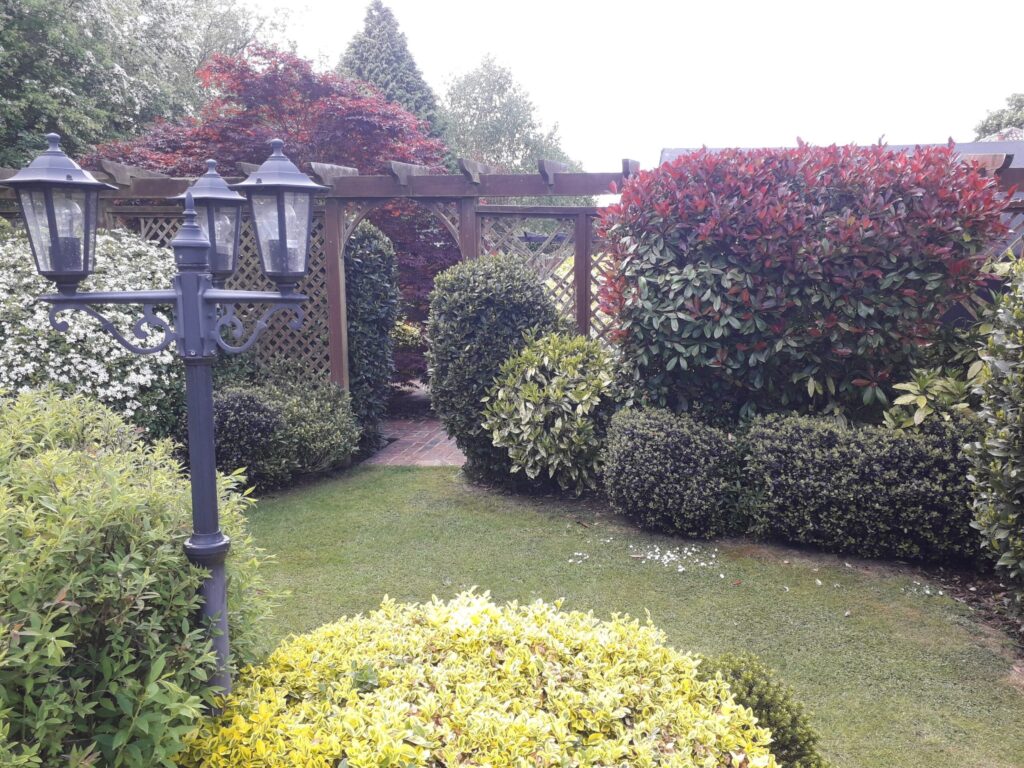
Modern Patio Material Ideas
The paving material affects the appearance, maintenance requirements and long-term performance of the patio.
Porcelain Paving
Porcelain is popular in contemporary gardens because it offers clean edges, consistent colouring and a wide range of finishes. It can recreate the appearance of stone, timber or concrete while remaining relatively easy to maintain.
Correct preparation and installation are essential for a stable result.
Natural Stone Paving
Natural stone provides variation in colour, texture and pattern. Sandstone, limestone and granite can all work in modern gardens when laid in a simple arrangement and paired with restrained planting.
Stone will change naturally over time, which may appeal to homeowners who prefer a less uniform finish.
Block Paving
Block paving is useful for detailed patterns, curved areas and patios that need to connect with paths or driveways.
Limiting the number of colours generally produces a cleaner appearance. The material should also suit the character of the property rather than being selected in isolation.
When comparing options, consider:
- Slip resistance
- Cleaning requirements
- Weather exposure
- Drainage
- Colour variation
- Joint maintenance
- Compatibility with the house
The most attractive sample is not always the most suitable choice for the completed garden.
Soften the Patio With Planting
A modern patio should not feel like a large, isolated area of paving. Planting helps connect it to the rest of the garden while introducing privacy, texture, shade and seasonal interest.
Useful ideas include:
- Narrow beds around patio edges
- Raised beds that help define seating areas
- Ornamental grasses for movement
- Evergreen shrubs for year-round structure
- Small trees for height and shade
- Climbers around pergolas or screens
- Repeated plants for a consistent scheme
Choose plants according to sunlight, soil conditions and maintenance needs. Delicate planting should not be placed where it is likely to be damaged by chairs, foot traffic or children playing.
Large containers can provide flexibility where built-in beds are not practical, although they require regular watering and should be positioned before furniture is arranged.
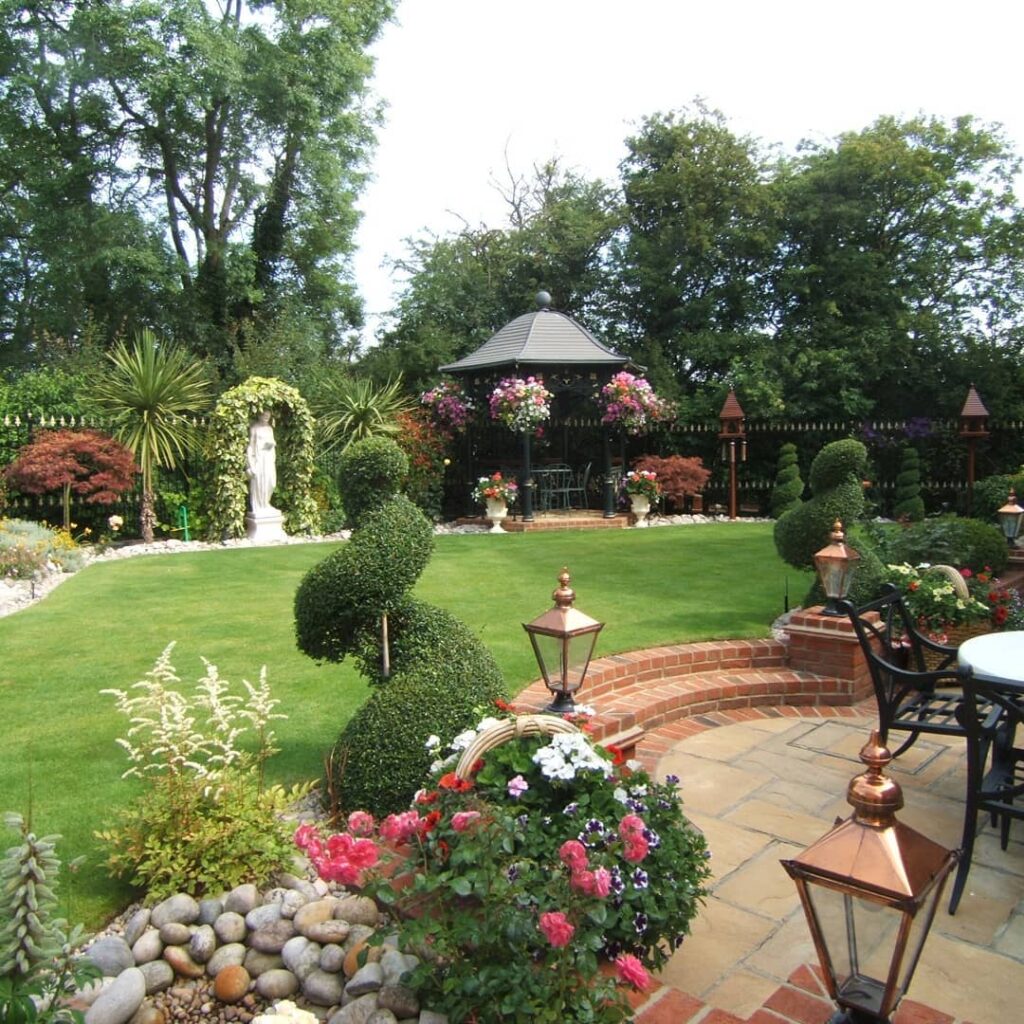
Add Features Without Overcrowding
Modern patios often benefit from one or two carefully selected features rather than several competing additions.
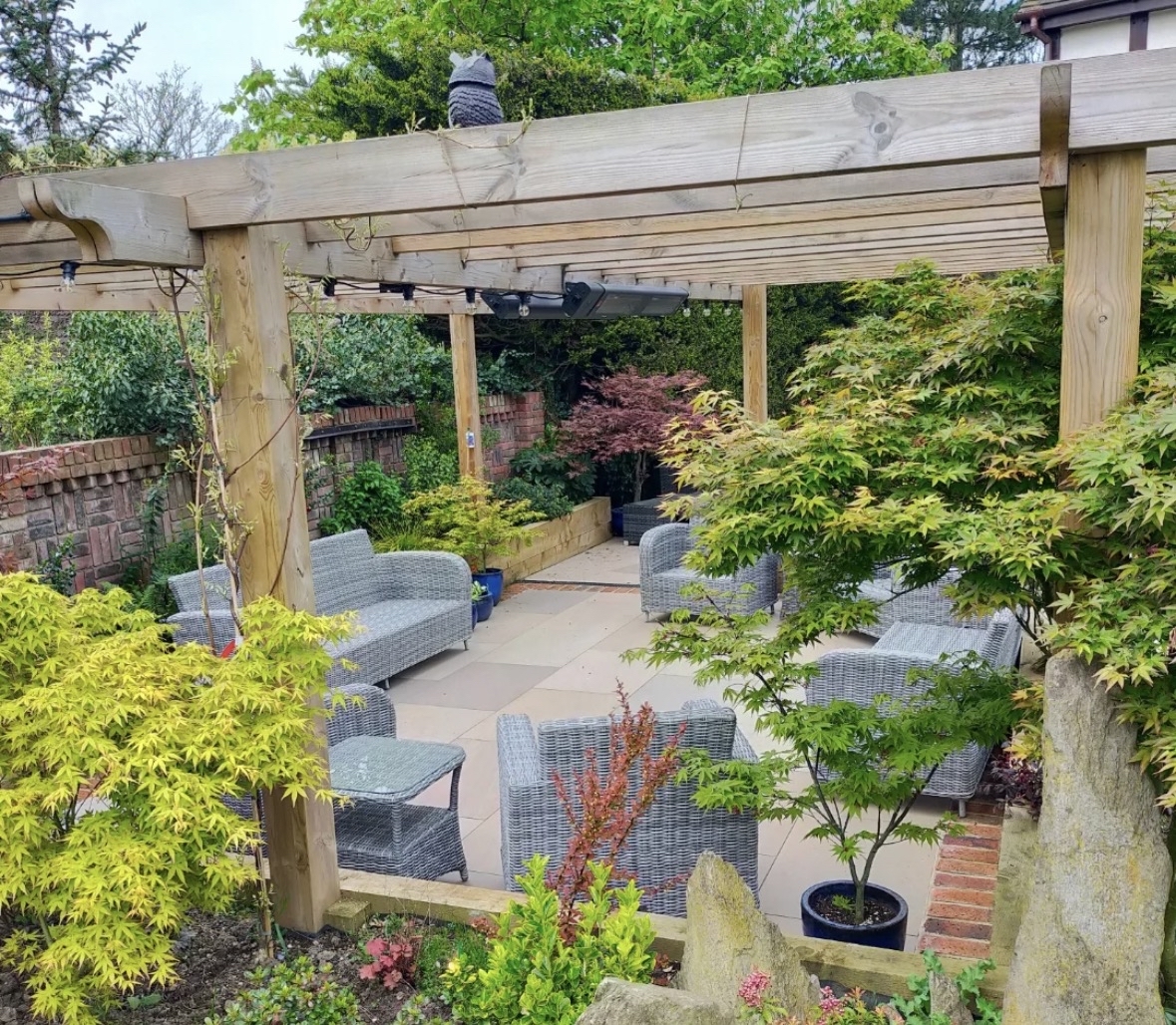
A pergola can define the seating area, provide partial shade and support climbing plants. A low wall may provide informal seating or help manage a change in level. Subtle lighting can improve safety and make the patio more inviting after dark.
Outdoor kitchens can work well for households that regularly cook and entertain outside. However, they require proper planning for movement, preparation space, utilities and weather exposure.
The main feature should support how you intend to use the patio. It should not reduce circulation, block important views or make the space feel cramped.
Common Patio Design Mistakes
One of the most common mistakes is creating a patio that is too small. Furniture may technically fit, but the area can become uncomfortable once chairs are moved and people need to walk around.
Other common problems include:
- Ignoring drainage and water run-off
- Choosing paving only for appearance
- Adding awkward steps or level changes
- Mixing too many materials
- Positioning seating without checking sunlight
- Leaving no room for planting
- Forgetting practical access
- Planning utilities after construction
Ground preparation is particularly important. Even high-quality paving may move, sink or develop drainage problems if the foundations and levels are not prepared correctly.
Another common issue is designing the patio separately from the rest of the garden. Paths, lawns, planting, fencing and nearby structures should all influence its position and shape.
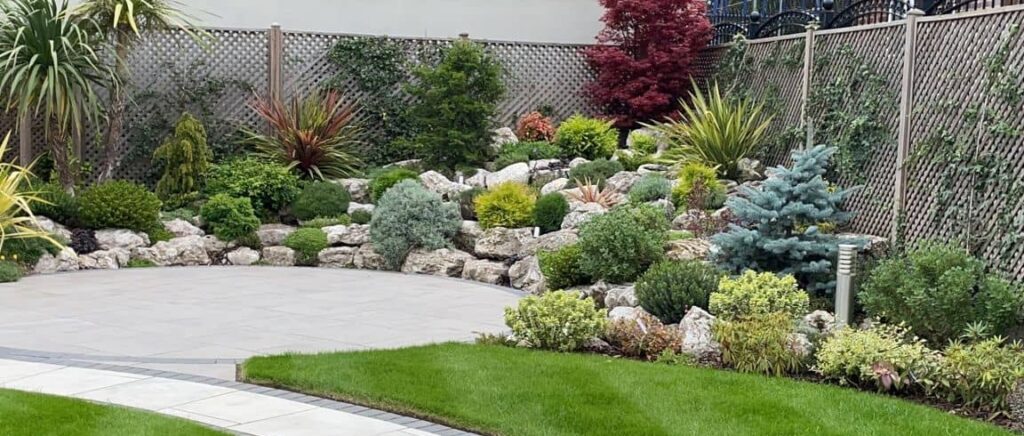
How to Turn Ideas Into a Practical Plan
Begin by measuring the available area and listing the activities the patio needs to support.
Record where the sun falls, how people enter the garden and which views you would like to enjoy or screen. Marking the proposed layout with string, temporary furniture or a garden hose can provide a clearer sense of proportion.
Work through these considerations:
- What is the patio’s main purpose?
- How much furniture is needed?
- Which materials suit the property?
- How will rainwater be managed?
- Is privacy or shade required?
- Will lighting or utilities be needed?
- How will the patio connect with the garden?
- Could future plans affect the layout?
For more complex gardens, professional planning can help coordinate paving with planting, drainage, paths, fencing and other features.
Explore our approach to garden patio design and installation for more information.
Frequently Asked Questions
The best shape depends on the house, garden and intended use. Rectangular patios suit many contemporary designs, but curved or irregular layouts can work where they respond naturally to boundaries, planting or existing features.
It should accommodate the table and chairs with enough additional room for people to move around comfortably. Measure the furniture in use, including chairs pulled away from the table.
Neither option is always better. Porcelain offers a consistent appearance and relatively simple maintenance, while natural stone provides individual colour and texture. The right choice depends on the preferred finish, property style and installation requirements.
Yes. Sloping gardens may require excavation, retaining walls, steps or raised areas. Levels, foundations and drainage need to be planned carefully before work begins.
Yes. Rainwater should be directed away from buildings and managed appropriately. The solution will depend on the paving, surrounding levels, ground conditions and wider garden.
Develop a Patio That Works for Your Garden
A good patio should feel comfortable, look considered and connect naturally with the rest of the outdoor space. Careful decisions about size, paving, drainage, furniture and planting can prevent costly changes and create a more useful result.